
Sport Fishing
Arapaima Fishing in Peru: Year-Round Access to the Amazon's Giant Fish
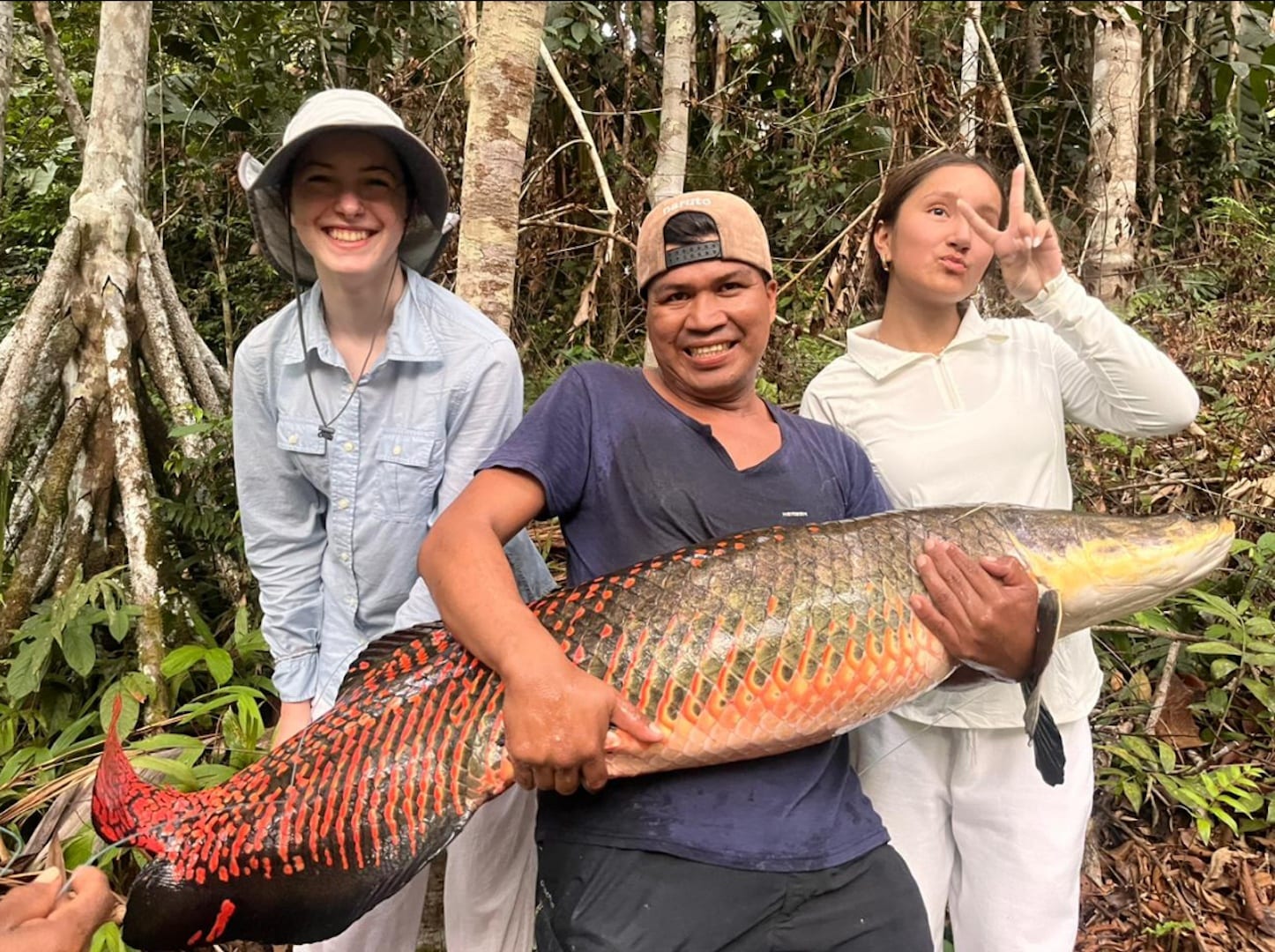
The arapaima (Arapaima gigas) is one of the most sought-after freshwater game fish on the planet — a 200+ pound, air-breathing giant found only in the Amazon Basin. For most anglers, catching one means waiting for a short seasonal window. At Brisa Tropical Eco-Lodge, it doesn’t. Our privately owned lagoon in the Peruvian Amazon gives us legal, year-round access to wild arapaima — one of the only places in the world where that’s possible.
This guide covers what makes our access unusual, what arapaima are, what an actual trip looks like, and how to plan one.
Year-Round Access: Why It Matters
Almost everywhere arapaima are found, fishing is restricted. Here’s how access works around the world:
- Brazil: Wild arapaima fishing is generally prohibited, allowed only in specific community-managed areas
- Peru (general): Wild arapaima fishing follows a regulated season (typically March–September), with closures during the reproductive period
- Colombia: Restricted to specific areas, with seasonal bans
- Bolivia: Dry-season fishing only (May–November), with strict regulations
- Thailand: Year-round access only in stocked artificial ponds (not wild fish, not the Amazon experience)
For most anglers, that means missing the season is missing the fish.
Brisa Tropical Adventures operates with year-round access to a privately owned lagoon in the Peruvian Amazon. Because the lagoon is private property, fishing is legal year-round — the seasonal closures that apply to wild fisheries don’t restrict access here. The lagoon is managed sustainably with strict catch-and-release rules, in partnership with the local community that helps maintain the fishery.
What this means for you: you don’t have to schedule your bucket-list trip around a closed season. November, January, July — any month works.
What Is an Arapaima?
Known locally as paiche (Peru) or pirarucu (Brazil), the arapaima is one of the largest freshwater fish in the world. They commonly reach 6–8 feet and 200+ pounds; the largest verified specimens push toward 10 feet and 440 pounds.
What makes arapaima unusual:
- They breathe air. Arapaima have a modified swim bladder that functions like a primitive lung. They surface roughly every 10–20 minutes to gulp air, which makes them easier to spot — and easier to target.
- They’re ancient. The genus has been around for over 20 million years, virtually unchanged.
- They’re armored. Their scales are tough enough to be used as nail files and are studied for body armor research.
- They’re powerful. A hooked arapaima will make explosive runs, often clearing the water entirely.
When to Go (When Any Month Works)
While most operators are tied to the June–October low-water window, our year-round access changes the math:
- June–October (low water): Traditional peak season. Water levels drop, fish are easier to locate, and weather is drier for travel
- November–May (high water): Fish are dispersed across more water, requiring more patience — but trips are quieter, the forest is at its lushest, and you’ll often have the lagoon entirely to yourselves
- September–December: Spawning peak for arapaima — catch rates can actually increase as fish are more active in shallow water
If you have flexibility, June–October is still the easiest fishing. If your schedule only works in February or April, we can still put you on fish.
Gear and Technique
Arapaima fishing is a specialty within Amazon angling. The basics:
- Rods: Heavy spinning or baitcasting rods rated for 50–80 lb fish
- Line: 65–80 lb braided main line with an 80–100 lb mono or fluoro leader (arapaima have hard, bony mouths)
- Lures: Large topwater plugs, swimbaits, and big spoons. Live bait is also effective where appropriate.
- Hooks: Strong, sharp, single hooks (better for fish health on release than trebles)
- Technique: Spot a surfacing fish, cast ahead of its line of travel, and work the lure across its path. Hook-sets need to be hard — their mouths are like leather.
All gear is provided, so you don’t need to fly in with rods unless you want your own.
Conservation and How Our Fishery Works
The arapaima is listed under CITES Appendix II, which makes responsible management essential. Because our lagoon is privately owned, we set and enforce our own conservation standards:
- Strict catch-and-release for all sport-caught fish
- Trained guides who handle fish briefly and keep them in the water during photos when possible
- Community partnership with the local people who help maintain the fishery
This isn’t a stocked pond — it’s a wild, healthy population in a natural Amazon lagoon, kept that way by careful stewardship.
What the Trip Actually Looks Like
A typical arapaima trip runs 4–7 days. The arc:
- Day 1: Fly into Iquitos, transfer by river to our jungle house in San Regis — a private accommodation closer to the lagoon than the main lodge
- Days 2–5: Daily fishing on the lagoon, with breaks for meals and rest at the jungle house. Mornings start early — first light is best for spotting surfacing fish.
- Final day: Return to Iquitos
The jungle house is small, private, and located in San Regis, which puts you within easy reach of the lagoon for early-morning fishing. Between fishing sessions there’s still time to see pink river dolphins, monkeys, macaws, caimans, and the rest of the Amazon cast.
What to Bring
Standard Amazon packing applies (lightweight long sleeves, hiking shoes, insect repellent, rain protection). Fishing-specific items:
- Polarized sunglasses (essential for spotting surfacing fish)
- Wide-brimmed hat
- Fingerless fishing gloves
- A small dry bag for phones and cameras
Our full packing guide covers the rest.
Booking Your Arapaima Trip
Because year-round arapaima fishing is rare, our lagoon books up — especially when anglers realize they don’t have to wait for the season. To plan a trip, contact us with your preferred dates and we’ll build an itinerary around the conditions, your experience level, and how many days you have. You can also see the full Sport Fishing tour page for the other species in our waters.
If you’ve been waiting for the right window to chase one of the world’s most legendary game fish, the window’s already open.
Plan Your Trip
Ready to See the Amazon for Yourself?
Browse our all-inclusive tours, or send us a message and we'll build a custom itinerary around what you want most from your trip.