
Lodge Life
Inside Brisa Tropical Eco-Lodge: Amazon Camping, Birding & Sport Fishing Near Pacaya-Samiria
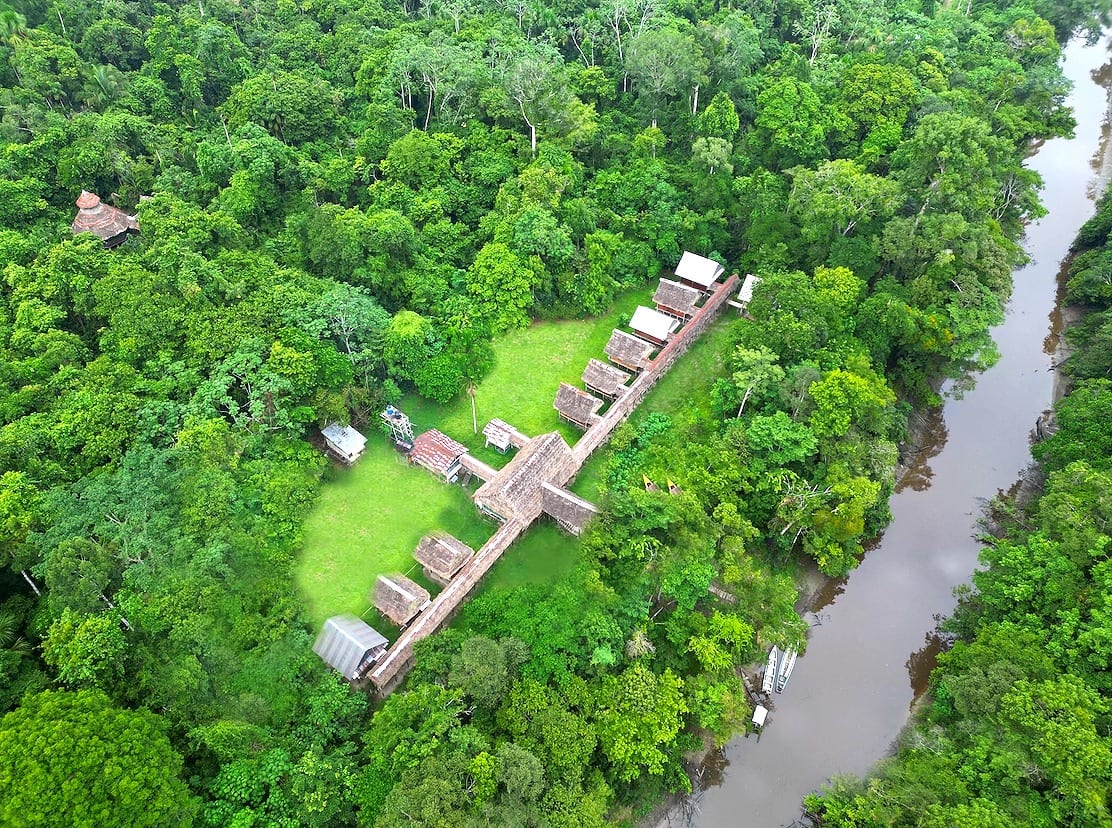
Most “what to expect” posts about Amazon lodges are interchangeable. This one isn’t — because Brisa Tropical Eco-Lodge sits in a particular corner of the Peruvian Amazon with a particular set of activities that aren’t on offer at every operator. This is a complete look at what guests actually do here: the wildlife you’ll see, the birding around Hoatzin Lake, the sport fishing on the Pacaya-Samiria waterways, the camping options, and what daily life at the lodge is like.
Where the Lodge Sits
Brisa Tropical Eco-Lodge is located on the Yanayacu River, a tributary of the Amazon, just outside the buffer zone of the Pacaya-Samiria National Reserve — Peru’s largest protected wetland and one of the most biodiverse places on Earth. The lodge is reachable only by river from Iquitos: a boat ride down the Amazon, a walk through a riverside village, and a second boat trip up the Yanayacu into deep forest. The journey itself is part of the experience.
This location matters. You’re in genuine wilderness, not at the end of a paved road. The flip side: getting here is a commitment, so most guests stay 3–7 days to make the trip worthwhile.
Our Second Base: The Jungle House in San Regis
In addition to the main lodge on the Yanayacu River, we operate a smaller property — the jungle house — in the village of San Regis. San Regis sits closer to the Pacaya-Samiria National Reserve and our private paiche lagoon, which makes the jungle house the natural base for:
- Pacaya-Samiria reserve tours
- Year-round arapaima (paiche) fishing trips
- Local region tours
- Camping (guests can also camp on the property)
The jungle house has private rooms and is more compact than the main lodge. If your trip is focused on the reserve or on the lagoon, this is where you want to be.
The Wildlife You’ll Actually See
Pacaya-Samiria covers over 5 million acres and supports an extraordinary range of species. On a typical multi-day visit, guests reliably see:
- Pink river dolphins (boto) and gray river dolphins, often within a few meters of the boat
- Capybaras, the world’s largest rodents, grazing along riverbanks
- Three-toed sloths in trees near the water
- Several monkey species, including squirrel, capuchin, howler, and saki monkeys
- Caimans, especially on night boat excursions
- Macaws, toucans, and dozens of other bird species (more on birding below)
Less common but possible:
- Anacondas and other snakes along the riverbanks
- Giant river otters, an endangered species that occasionally appears in the reserve
- Jaguars — these are extremely rare to see but the reserve does support a healthy population
A note on jaguars: any operator who promises jaguar sightings is overselling. Genuine sightings happen but are uncommon. The fact that they’re here at all is a sign of a healthy ecosystem.
Birding: Hoatzin Lake and Beyond
This area is a serious birding destination. Over 300 bird species have been recorded in and around the lodge’s range. The signature location is Hoatzin Lake, named for the bird that thrives there.
The hoatzin (Opisthocomus hoazin) is one of the most unusual birds in the world — sometimes called the “stinkbird” because it ferments leaves in a chambered crop like a cow’s stomach. Hoatzin chicks even have claws on their wings, a feature shared with prehistoric birds. They’re loud, colorful, and easy to spot in waterside vegetation.
Other species commonly seen on guided birding excursions:
- Scarlet macaws and blue-and-yellow macaws — flocks moving across the canopy at dawn
- Hoatzins in their namesake lake and surrounding waterways
- Several kingfisher species — ringed, Amazon, green, and pygmy
- Herons and egrets — capped heron, great egret, cocoi heron
- Trogons — black-tailed, blue-crowned, and others
- Toucans — channel-billed, white-throated
- Eagles and hawks — including the dramatic snail kite
Birding is best in the early morning. Overnight camping trips to Hoatzin Lake are an option for serious birders who want to be in position at first light. See our full Birding tour page for itineraries.
Sport Fishing
The waterways around the lodge hold some of the Amazon’s most sought-after game fish:
- Peacock bass (tucunaré) — aggressive, hard-fighting, the most popular target
- Piranha — multiple species; quick to bite and often eaten fresh
- Arapaima (paiche) — the giant of the Amazon. Our privately owned lagoon gives us legal, year-round arapaima fishing — one of the only places in the world where this is possible. See our dedicated arapaima guide for the full breakdown.
- Catfish — including the enormous redtail catfish
Fishing tours are guided by local experts who know specific lakes and channels. All gear is provided, including rods, reels, lures, and live bait where appropriate. Catch-and-release is standard for trophy species; smaller fish (piranha in particular) are sometimes kept and cooked by the lodge chef for lunch — a memorable Amazon experience in itself.
The best general fishing season is the low-water months (June–October), when fish concentrate in smaller bodies of water. Arapaima trips, however, run year-round at our private lagoon.
Camping in the Rainforest
For travelers who want to go deeper than a lodge stay, Brisa offers overnight camping trips. There are two main options:
River beach camping (low water season only) During the dry months, sandbars and beaches appear along the rivers. Camp is set up directly on the sand, with a fire, a tarp shelter, and dinner cooked in the open. You’ll fall asleep to the sounds of the jungle and wake up to the river at your feet.
Forest fly-camp A simple camp set up in the jungle itself, used as a base for early-morning birding, fishing in remote lakes, or night wildlife walks. More rustic than the lodge, but unmatched for proximity to wildlife.
Both options are guided, with all equipment provided. Camping pairs well with birding (early-morning species) or fishing (early-bite peacock bass).
Daily Life at the Lodge
Between excursions, life at Brisa is intentionally simple. The bungalows are wooden, screened, fully enclosed in mosquito netting, and have private bathrooms. Each room looks out onto either the river or the jungle. There’s no air conditioning — you don’t need it once you’re under the trees — but ceiling fans and natural ventilation keep things comfortable.
Meals are served family-style and use local ingredients: fresh river fish, plantains, yuca, jungle fruits, and Peruvian Amazon dishes you won’t find on standard tourist menus. Vegetarian and dietary requests are handled with advance notice.
Between activities, guests use the hammock area, the bar, the open-air dining space, or simply read in their bungalow. Wi-Fi runs evenings from 6–9 PM — most guests find disconnecting outside that window is the point.
Included with every stay: all transportation from Iquitos, all meals, licensed bilingual guides, rubber boots, drinking water, and 24-hour coffee and tea. (Drinks at the bar lounge are billed separately — everything else is in.)
Planning Your Trip
Length of stay: 3 days is the minimum to make the river journey worthwhile. 4–5 days lets you cover all the main activities. 6–7 days is ideal for serious birders, anglers, or anyone wanting deep camping experiences.
Best season for each activity:
- Birding: November – May (with year-round opportunities)
- Sport fishing (general): June – October
- Arapaima fishing: year-round at our private lagoon
- Camping: June – October
- Wildlife and boat exploration: any season
See our best-time-to-visit guide for a deeper month-by-month breakdown.
Getting here: Fly into Iquitos (Coronel FAP Francisco Secada Vignetta International Airport, IQT). Lodge transfers from the airport are included in all packages — see our airport-to-lodge guide for the full journey.
Cost: All-inclusive packages start from $175 per person, depending on length of stay and chosen activities. There are no hidden fees.
If you’d like to build a custom itinerary — whether that’s a birding-focused week, a fishing-only trip, or a mix of everything — contact us and we’ll put together a plan that matches what you actually want from your Amazon trip.
Plan Your Trip
Ready to See the Amazon for Yourself?
Browse our all-inclusive tours, or send us a message and we'll build a custom itinerary around what you want most from your trip.